Showing posts with label Bill Ryder-Jones. Show all posts

Monday, September 24, 2018

Where There's Life


The last post on this blog ended with a short discourse on Bill Ryder-Jones' song, Satellites, followed by the high-handed declaration, "I do not think I have encountered any problem that could not be made even a little bit better by listening to the songs that saved your life". Well, that was nine months ago and in that time I have found out that music cannot make everything better and songs don't save lives; but that's another story and this is not the place to write it.

What is fitting, though, is that, after a self-imposed hiatus, Sussex Sedition resumes with Bill Ryder-Jones. Last week, he was at the Queen Elizabeth Hall in London's brutalist South Bank Centre, a gig I approached with much anticipation, not just because he has a new album, Yawn, out in November but because he was being supported by Our Girl, the young Brighton three-piece whose recent debut album Ryder-Jones played on and produced.

I had been listening to Stranger Today for the previous few weeks: it is a noisy album that deserves a Ziggy Stardust-style imperative TO BE PLAYED AT MAXIMUM VOLUME and, even without their honorary member appearing with them live, they still make a hell of a racket. This is mainly due to the ferocity of the rhythm created by Lauren Wilson's thunderous drumming and Josh Tyler's low frequency rumbling bass; overlaying this, Soph Nathan's scuzzy guitar work and dreamy vocals see the band's sound drifting from the territory of slacker shoegaze to psychedelia, particularly on the Stone Roses-esque, In My Head. But it is not all a heavy workout: the melodies of I Really Like It and Level show the more tender side of Our Girl.

When Bill Ryder-Jones takes the stage he is alone - apart from the people who arrive late in their seats right at the front, causing a delay - and begins the set with only his guitar for accompaniment. Needless to say, he plays some of his most delicate songs; the first two, Seabirds and Put It Down Before You Break It, are from 2015's West Kirby County Primary, and the third is By Morning I, from its sometimes overlooked predecessor, A Bad Wind Blows in my Heart.

When he is joined on stage by his touring band, Liam Power's By The Sea, Ryder-Jones announces a sequence of songs from the new album and wryly assures us they will be followed by "all the hits". Of the new tracks, the superbly titled, Mither, a word my northerner mum used to use, and And Then There's You stand out, perhaps because they have been available to listen to online. The latter, with its memorable couplet, "Tell me again what I'm worth/When everything hurts", indicates that we will be on familiar emotional ground on the new album and the song builds to an affecting close with the plaintive refrain of "My mistress, my mistress/Take me home again".

As promised, more familiar material makes up the remainder of the set: favourites Two To Birkenhead, Daniel, Wild Swans, Catharine and Huskisson and Wild Roses precede the final song of the night. Closing the performance with the crescendo of Satellites and its observation that "You saved me with the thought/That something somewhere must be happening" was particularly poignant for me: where there's life, there's hope.

Friday, December 29, 2017

The Last Post


At a New Year’s Eve gathering in 2009 I was asked by one of the other guests what my top five personal highlights of the year had been. Feeling put on the spot and under pressure to come up with some things that made me seem like an interesting and well-rounded person, I said: a good harvest at the allotment; my middle child starting school; witnessing Gary Alexander's wondergoal at Wembley; seeing Richard Hawley play live; standing at the Hardy Monument on the top of Black Down Heath in Dorset. My questioner smiled and reeled off her own (which, I then realised, had been the real reason for asking me): getting an HD TV; getting a new car, getting new double glazing; getting a smartphone; going on holiday abroad. As the general conversation then centred around holidays and cars, I sat there feeling stupid: I had come across as earnest and worthy and entirely out of step with everyone else’s mood. It was at that moment that I decided to start a fanzine.

Reflecting on my humiliation, I thought that there was much to be said for celebrating the simple things in life and, with two friends, launched Sussex Sedition. The ‘sedition’ of the title was to go against the prevailing materialistic thinking and the ethos was to be positive - there were enough bitter words out there already. Drawing inspiration from writers such as Kathleen Jamie, Tom Hodgkinson, Roger Deakin and Iain Sinclair, we wrote in praise of the pleasures to be derived from the world just outside our windows. Early articles covered vegetable growing, walking on the Sussex Downs, and British Sea Power. It was a desktop production - printed cheaply by a local firm - and distribution was something of a guerrilla operation. It was available free from those tables of leaflets and magazines that pubs always have - sometimes with permission, sometimes without.

After a few quarterly issues the, albeit small, cost of production became prohibitive for a bunch of cash-strapped public sector workers and Sussex Sedition ceased to be a physical fanzine. Wishing to continue paying tribute to the revolution of everyday life, I kept the name going as a blog with a few posts each month. Using the natural and man-made landscape of East Sussex as the mainstay, the blog also strayed into politics and music. What I found incredible was how many more people would read an article on popular music than, say, buttercups – who knew? Pieces I have written on Sleaford Mods, Vic Godard and Augustines have been the most-read by a long way. In fact, the review of Sleaford Mods’ Brighton gig in 2015 is the piece the frustrated NME journalist in me is most proud of – writing it took me right back to my punk fanzine days.

It has been a joy to write this blog for the past six years and I have received some lovely comments from people in response; but today I am writing the last post. I have embarked on a more substantial project and I need to focus all of my writing attention on that. I had thought about trying to collect the pieces together in some sort of bumper retrospective issue of the printed fanzine but instead I think I will simply leave them here in cyberspace - floating like defunct satellites in real space, blinking as they orbit the earth – just in case anyone picks up their signal.

Finally, most things make me think about music and, talking of satellites, three of my favourite songs have that word in the title. Therefore, apropos of nothing in particular:

Satellite of Love by Lou Reed – I was probably about thirteen when someone told me that David Bowie and Mick Ronson played on an LP by Lou Reed. When you are obsessed with a singer, you tend to explore anything associated with them and I went out and bought Transformer. It is an album I have been playing ever since and one that sent me down the back-doubles of discovery to the Velvet Underground. Satellite of Love is my favourite track: often in the shadow of the hit single Walk On The Wild Side or the beautiful Perfect Day or the pre-punk Vicious, it is the most tender paean to love and jealousy. And if you ever heard it sung by the late, great Kitty Lux of the Ukulele Orchestra of Great Britain, you are lucky too.

Satellite by Sex Pistols – the B side of Holidays in the Sun, the sheer racket and sense of everything being on the verge of collapsing into chaos make this my favourite Pistols’ track. Lydon is at his most demented: he spits out his feelings towards people the band met at those early gigs in London’s satellite towns over Steve Jones’ fantastic reverb-drenched guitar and Paul Cook's phenomenal drums. Recorded in the capital in June 1977 at the height of the bands’ justified paranoia over Jubilee fascist thugs, you can hear Lydon’s frustration in the outro as he repeatedly smashes the microphone on the Wessex Studios’ floor. It leaves me exhausted each time I hear it.

Satellites by Bill Ryder-Jones – 2015’s West Kirkby County Primary is probably my favourite album of recent years. Its combination of hushed ballads and fuzzy rock was a revelation to me; with an honesty bordering on confessional, its songs are both painful and liberating. Satellites, the album’s penultimate song, slowly builds its tale of regret – “I'm stranded in the dark/ of everything I've loved and went and tore apart/ I got lost in myself and time got lost as well” – to a stunning slacker crescendo.

So, it ends with music; and, for me, everything does. In truth, I do not think I have encountered any problem that could not be made even a little bit better by listening to the songs that saved your life. See you on the other side.

Wednesday, September 6, 2017

At the End of the Road


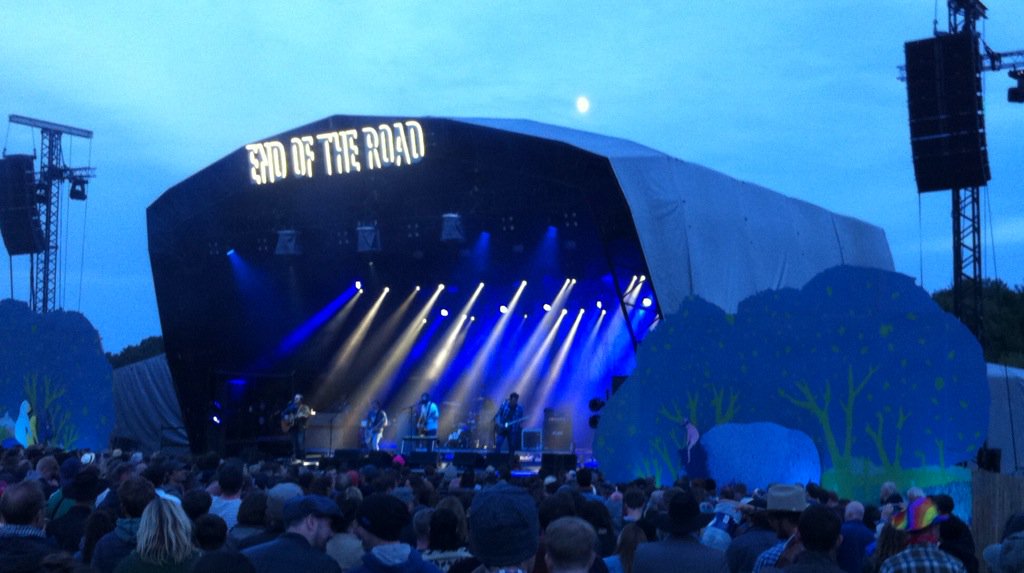
You know a festival is going to be bloody great when the Thursday evening warm-up acts are so good they could easily suffice as the final night line-up. The Wave Pictures/Slow Club supergroup, The Surfing Magazines, get things going nicely in the Tipi Tent with amiable Dave Tattersall’s frantic bluesy guitar work before we dash off to catch The Moonlandingz stomping it up all over The Woods stage. Back in the Tipi Tent Bo Ningen are utterly mesmerising: I have seen the Japanese noise monsters before but at Dorset's End of the Road the frenzy they whip the audience into is without precedent.

The sun was shining brightly at the Garden Stage at lunchtime the next day but Julie Byrne was being a bit precious about some sound problems and played only a truncated set. This was a shame as her album of delicate folk, Not Even Happiness, has been one of the most played at our house this year. A bit later on the same stage, Ryley Walker had no such problems and delivered a blistering set of freeform folk jazz. His band, particularly the bassist, were full of energy and I suspect Walker himself was full of “pints of beer the size of your arm” that he expressed his love of. Over in the Big Top, Aldous Harding’s gothic folk was captivating but the lure of Parquet Courts was too much as their Modern Lovers/Velvet Underground New York sound drifted across the site. Mac DeMarco was the Friday night headliner but I found it difficult to concentrate during the Canadian singer-songwriter’s set as my mind kept drifting back to the band I had just seen in the Tipi Tent. Housewives, a young South London five-piece, were late replacements for Mdou Moctar, who could not appear due to visa problems. They played a bewilderingly intense set of experimental music that left the audience reeling. Their disrupted time signatures and sonic weirdness was one of the best things over the weekend and I can only compare their performance to This Heat, who I saw at the ICA in the early 80s.

Saturday dawned with clear blue skies and a shimmering heat haze and Sinkane, with their blend of afrobeat and reggae, got us all dancing. But I had a horrible dilemma hanging over me: with Bill Ryder-Jones, Nadine Shah and DUDS all playing at the same time I was spoilt for choice. In the end, I caught all of Ryder-Jones' set before legging it up to the Garden Stage to catch most of Nadine Shah; I missed DUDS but, fortuitously, they are playing Brighton later this month. Bill Ryder-Jones was immaculate: playing intimate, tender songs on the largest stage at the festival takes some guts but, mixed with powerful slacker anthems such as Two to Birkenhead and Catherine and Huskisson, he pulled it off - must be time for a new album, though, Bill. Three albums in, Nadine Shah is firmly in her stride: Holiday Destination, which made up the bulk of her set, is a jagged slice of post-punk anger about the xenophobia and anti-immigrant sentiment that seems to define the modern world. By the time I got into the shade of the Big Top stage, I realised that the heat of the day had caused me to visit the cider bus a few too many times. Let’s Eat Grandma were two teenage Kate Bushes let loose in the music cupboard and were very entertaining. Saturday night wrapped up for me at the main stage with Ben Bridwell’s Band of Horses, the perfect band for that twilight moment at a festival: in the fading light, spine-tingling melodies and harmonies rang out across the site on numbers such as St. Augustine, Is There A Ghost, No One’s Gonna Love You, Funeral and, standout track from this year’s Are You Ok? album, In A Drawer.

I was woken on Sunday morning by the patter of tiny raindrops on my tent and, from then on, the drizzle never really went away. But if clothes and boots were damp, spirits were not. A band completely new to me, Nova Scotia’s Nap Eyes, were a delight on the Garden Stage. Their lo-fi guitars and post-punk drums were the perfect canvas for Nigel Chapman’s weary Lou Reed vocals. Nadia Reid’s folk was mature and hypnotic but she still has to sell a lot more tea towels and tote bags to be able to bring over more of her band from New Zealand than just guitarist Sam Taylor. The Tipi Tent was a lock-out for teenage (mostly) girl band Girl Ray, and deservedly so. Their infectious indie-pop melodies lifted everyone’s mood and their set was as fantastic as their album; Don’t Come Back At Ten must be one of the tracks of the year. I was eating my final Goan fish curry of the festival when The Jesus and Mary Chain came on but their white light drew me down to The Woods stage. The resurgence of the Mary Chain has been one of the highlights of the year and the once contrary band now seem like elder statesman of alternative rock. Jim Reid oozes effortless charm (“I hope we’ve been able to cheer you up a bit”) as brother William and his guitar are lost in a Spectoresque wall of sound. Nine Million Rainy Days was apt, Just Like Honey was timeless and the opening line of the closing song was perfect for the captive audience at this superb festival: “I love rock 'n' roll/And all these people with nowhere to go.” I wouldn't be anywhere else; I have already bought my ticket for next year.

Thursday, March 3, 2016

Beautiful Truth


Every once in a while in music, something comes along that makes you want to shout about it to the world. You become a bore to your friends and family as you take every opportunity to shoehorn it into the conversation, no matter how tenuous it may be. I find it happens less and less as time passes but that thrill of listening to a new album, connecting with it instantly and knowing that - as a whole - it is a work of staggering brilliance, never diminishes despite its infrequency.

Such a thing happened to me a few months ago: hearing a Bill Ryder-Jones track on an end-of-year music magazine compilation CD, I went straight out and bought the album, West Kirby County Primary, that it came from. From first play, I fell in love with the contrast between the tender delicacy of its whispered ballads and the scuzzy lo-fi of its slacker rock. Then I started to mention it. To everyone. And that was when I knew how good Bill Ryder-Jones is - because they all came back just as evangelical about his music as me.

Later, I found out that I had missed seeing Ryder-Jones live by minutes at last summer's Green Man festival in Wales: arriving at the main stage on the first afternoon to await Sweet Baboo, I was unaware that he had just left the stage; I could have been smitten much sooner. So when last night's gig at Brighton's Green Door Store was announced before Christmas, I snapped up some tickets.

Ryder-Jones is modest and unassuming from the start: he thanks us for coming out on a night when there is football on the televison and apologises for not being good at "banter" between songs. We don't care. The songs are so breathtaking live: he has the audience spellbound with the hushed fragility of album-opener, Tell Me You Don't Love Me Watching, and gives us an early treat with the glorious druggy fug of Catherine and Huskisson, one of the album's stand-out tracks.

The set is not all drawn from the current album, though. There is a new number and a quintet of songs, including the beautifully evocative The Lemon Trees #3, from A Bad Wind Blows In My Heart, Ryder-Jones' previous album which is currently on heavy rotation at my house. Wild Swans, with its restrained Northern Soul tempo and recurring refrain of "don't tell me that it's over", is particularly moving.

Halfway through the set, Bill's band - fellow Wirral natives, By The Sea - leave the stage and he performs By Morning I and, as the focus once again becomes West Kirby County Primary, Put It Down Before You Break It accompanied only by his guitar. The latter song feels as though it will fragment under the weight of its own emotion as he sings, "And now I'm throwing up/ Because the things I'm thinking/ Are things I'd like to keep from sinking in." "I'm alright, y'know," he reassures us between songs but the writing is so raw and confessional that we feel for him.

When the band return, there is a run of oustanding songs - Two To Birkenhead, Wild Roses, Daniel, Satellites - to close the set; Ryder-Jones dedicates Daniel to his brother and, from the lyrical content, it is hard not to be fearful of the tragedy it contains: "Like some unopened birthday card I keep you boxed with my unwanted memories/ Daniel belongs to the ocean." And as it moves from bereavement to depression, the narrative switches to a convenient objective voice: "If you take the pills you might not get so ill/ Let's make it easy for you Bill."

The lyrics are personal and heartbreaking and, as he sings on Wild Roses, Ryder-Jones is adept at "turning stories into beautiful truth." A founder member of The Coral in his mid-teens and having left the band ten years later, Ryder-Jones has had his share of difficulties with drink, drugs and a troubled state of mind. But he has no illusions about the romance of music: in a recent interview he declared, "You've already fucking lost if you're involved in it [music]. Artists aren't happy. People who love music aren't happy." I just hope that such a tender soul manages to not snag on the sharp edges of this jagged world.