Showing posts with label Hastings. Show all posts

Sunday, January 22, 2017

Do What Thou Wilt


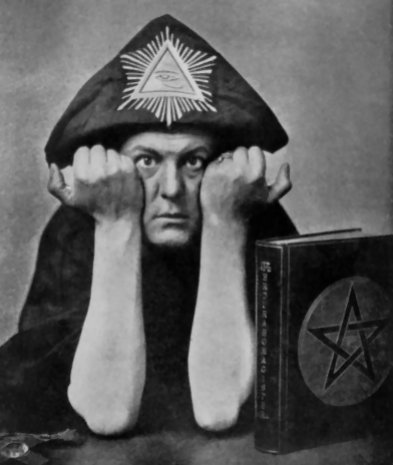
On the 1st December 1947, a 72 year-old man died at the Netherwood Guest House on The Ridge in Hastings. He had lived there for two years and had been in ill health throughout that time; he finally succumbed to chronic bronchitis, pleurisy and heart disease. This was not an unusual occurrence for a seaside town boarding house with an elderly clientele. And this particular guest was typical: he had spent his days unremarkably, taking local walks and beating all-comers at Hastings Chess Club. What had marked him out from the others, however, were the parcels he received from around the world, occasional visitors from London and Europe and the fact that he spent the nocturnal hours in his room at Netherwood reading, writing and taking heroin.

The elderly man was Aleister Crowley and his incredible life had led him, not many years before, to be regularly dubbed ‘the wickedest man in the world’ by the tabloid press. An occultist, he had devoted his life to the search for wisdom through an exotic mix of mysticism, paganism, magic, sex and drugs - it was the last three that really got the press going. Born into a wealthy family in Leamington Spa, Crowley had rejected his fundamentalist Christian upbringing and, in his early twenties, joined The Golden Dawn occult society and was soon practicing ceremonial magic. His inheritance allowed him to travel and, after spells in Mexico, Egypt, India and China, where he studied religions and climbed mountains (he was a serious mountaineer), he published The Book of Law, espousing the idea that people should be free to follow their own will. This book, and its motto ‘do what thou wilt’, had supposedly been dictated to Crowley by a messenger from the Egyptian deity Horus and it became the cornerstone of his own religion, Thelema.

Crowley also established an order, the A:.A:., based in Victoria in London, where his religion was practiced. He had become interested in the ritual use of drugs – particularly hashish – in his search for objective truth and had been privately experimenting with bisexuality and sadomasochism. Influenced by his close links with a German occultist group, Ordo Templi Orientis, Crowley began to incorporate ‘sex magick’ – the use of sexual activity and arousal - into his Thelemic ceremonies. His spelling of ‘magick’ was to differentiate his sorcery from the popular stage magic of the early 20th century.

Crowley’s chaotic personal life – one of his two daughters had died of typhoid in Burma and his alcoholic wife had been institutionalised in Britain - worsened as his money ran out. He was a prolific writer of books on mysticism but also wrote poetry, plays and articles; and when war broke out in 1914 he travelled to the United States and earned a living there as a journalist writing for Vanity Fair and other publications. He became involved in the pro-German movement in New York and wrote for the propaganda newspaper, The Fatherland. This led him to be condemned as traitor in Britain but Crowley had been, in fact, working as a double agent for British intelligence.

Back in London after the war, he was prescribed heroin to treat his asthma and so began an addiction that would stay with him for the rest of his life. He published Diary of a Drug Fiend in 1922 and was demonised in the popular press as a result. This was compounded when details began to emerge of the goings-on at the Abbey of Thelema that Crowley had established in Sicily. Stories of degradation and depravity led to the Sunday newspaper, John Bull, declaring him to be 'a man we'd like to hang'. In 1923, he was deported back to Britain by the new young Italian Prime Minister, Benito Mussolini.

In the 1930s, Crowley continued his nomadic existence moving from Tunisia, to France, to Germany. He wrote his autobiography in Paris and exhibited paintings in Berlin before moving back to London at the start of the Second World War. After periods in Devon, Buckinghamshire and Surrey, he settled, for the last time, in Sussex in 1945. After his death, he was cremated in Brighton where one of the few mourners read from The Book of Law. The tabloids reported his final ceremony as a Black Mass but were disappointed in the lack of sex and drugs.

Saturday, August 6, 2016

Golden Songs


When Ryley Walker came over from the United States two years ago to play at record store and gig promoters Music's Not Dead's third anniversary celebration in Bexhill, the halfwit in me meant I did not go. Only having heard of him fleetingly when his debut album, All Kinds of You, had come out a few months earlier, I passed up the chance to see the Chicago-based musician for a fiver at the modest Albatross Club on the seafront on the grounds that Bexhill was about to host relatively expensive appearances by British Sea Power and Johnnies, Marr and Lydon. With hindsight, it was clearly my loss.

Last year, Walker's soulful bluesy folk - music that seems to draw most comparisons with Tim Buckley and onetime Hastings resident John Martyn - began to attract more attention. Second album, Primrose Hill, garnered glowing reviews and featured in many end-of-year best album lists, with Mojo praising his "wild complexities of sweet melody and song" and comparing his guitar playing to Bert Jansch. And now, as if to compound the Pentangle dimension to his sound, Walker has been touring with that band's legendary double bassist and sometime John Martyn collaborator, Danny Thompson.

There was no Thompson at Hastings' cathedral-like St. Mary in the Castle last night but this did not detract from the quality of Walker's performance. With the Norwegian duo of Julius Lind on electric bass and Stale Solberg on drums, the trio showed that Walker has quickly moved on from last year, with the bulk of the set made up of songs from forthcoming album, Golden Sings That Have Been Sung. And the songs were golden: highlights included The Halfwit in Me ("about being a dummy in Chicago"), The Roundabout and Sullen Mind. Walker's acoustic guitar shimmered and soared and his freeform interplay with Solberg's percussive idiosyncrasies was joyful.

Naturally funny and engaging, Walker was effusive between songs and expressed his love of seaside towns, drinking and eating fish 'n' chips but said that he fears violence from seagulls more than almost anything else in the world. There is a sense that he enjoys being permanently on the road and when he (sort of) name checked Music's Not Dead ("Music Stays") he asked where the late bar was. Finishing with a stellar version of Primrose Green, there was just time for one quick encore before the drinking could begin in earnest.

Earlier, Brighton-based Holly Macve had played a short set of haunting songs accompanying herself on guitar. Recently signed to Bella Union, I saw the 21-year-old support John Grant last year and was struck by her mesmeric and ethereal voice - a real talent destined for great things.

Wednesday, May 25, 2016

Together We Stand


To hear Jeremy Corbyn speak about the European Union as a force for social justice yesterday evening was to remind me that, up until now, the debate over the EU referendum has largely been a battle of swinging dicks, trading hypothetical consumer testing points. In a race to appeal to the electorate’s lowest common denominator – what’s in it for me? – it was refreshing to hear a high-profile politician outline what is in it for us.

Corbyn was sharing the stage at St. Mary in the Castle in Hastings with Judy Rogers, a local Labour councillor, and Shakira Martin a vice-president of the National Union of Students. Their compelling stories underlined Corbyn’s point that other voices were not being heard in, what has boiled down to, a playground spat between two Old Etonians.

Rogers outlined the struggle, throughout her career, to achieve pay equality with her male counterparts and Martin, a young black single-parent who was involved in Corbyn’s leadership campaign last year, spoke of the power of education to transform the lives of people in her position.

Taking his cue from these confident women, Jeremy Corbyn outlined a positive view of the EU and defined Britain’s Tory government as the real institution of restrictive self-interest. Rather than focus on business, he proposed a vision for a reformed EU that builds on the great strides in social justice already made in the areas of employment rights, human rights, climate change and air and sea pollution.

It was a message that is not heard often enough in the referendum debate as it fails to permeate a mainstream media obsessed with personalities, conspiracies and splits. Corbyn refuses to play that game and instead invokes the spirit of Robert Tressell by emphasising that we can only move forward if we work together, and that we will only go backwards if we stand in isolation.

Friday, April 29, 2016

Red Wine Smiles


There was a wonderful moment in the middle of The Lovely Eggs set in Hastings last night: in celebration of the band's anniversary, they play a couple of quick 'old' numbers; the thirteen-seconds-long Muhammad Ali And All His Friends segues into the twenty second burst of fury that is I'm A Journalist. The latter, singer and guitarist Holly Ross says, is for anyone who has a shitty job. After asking the audience who has a job they hate, they then repeat the song with personalised lyrics for a civil servant called Keith - only at a Lovely Eggs gig would this happen.

The Lancaster punk duo - Ross and partner David Blackwell on drums - have been around for 10 years, releasing four small-label albums, a raft of singles and gigging regularly to critical acclaim. But despite the connections and endorsements - Gruff Rhys has produced them, Chris Packham adores them - they have stayed faithful to their "we do exactly what we like" ethos and remain a true underground band. Having seen them perform at the Green Man festival in Wales last summer, it was a delight that one of the 12 dates on their UK tour was just down the road at the Carlisle, the rock pub on Hastings seafront.

"We like your town," they tell us of their first visit to the Sussex seaside resort. They have spent a lovely day eating Morrisons' sandwiches in Alexandra Park - they were surprised that it is just as bloody cold down here as it is up north - and having their tea in Super Pizza. They have their three-year-old son on tour with them and they'll be up again at six in the morning - so no moaning from the audience about gigs on a work night.

There are those in the boozy crowd who are new to The Lovely Eggs, but they are clearly captivated from the beginning by the clever, funny and touching lyrics and the sheer joyous racket that two musicians are able to make; wherever I look, I see smiling faces. Fuck It, I Just Want Someone To Fall In Love With and People Are Twats are instant singalongs and touch upon universal themes; and as if to prove the point, a twat wanders onto the stage towards the end of the set only to be sent away with a flea in his ear from Holly. With no fake encore (see their website and sign the petition), the hilarious and ever-popular Don't Look At Me - "look at us with our red wine smiles" - provides the rousing finale.

Earlier in the evening, local band The Sine Waves had treated us to a highly impressive collection of space-age surf punk instrumentals. With lab coats, masks and some interesting radiophonic sound effects, they seemed as though they had stumbled straight off the set of The Quatermass Experiment.

Sunday, April 17, 2016

Making Mischief and Merry


A male face, with a beard of foliage, peers out of a surrounding of leaves and vines with narrowed eyes and an expression that is either anger or laughter; the folkloric figure of the Green Man is hard to define. Ostensibly a pagan symbol of fertility or a sprit of nature, he is most often found carved in wood or stone as an architectural ornament in churches - or on the signs of many eponymous pubs.

As an emblem of rebirth associated with the growth of spring and the onset of summer, the Green Man is also something of a Puckish figure. Robin Hood and Peter Pan are sometimes claimed as distant relations, as is the Green Knight from Sir Gawain and the Green Knight. In this 14th century Arthurian romance, Sir Gawain is challenged and tested by the laughing knight who, at the tale's conclusion, is revealed to be something of a shape-shifting trickster.

A closer relation of the Green Man is Jack in the Green. The English tradition of making garlands for participants in May Day parades developed, in the 17th century, to the extent that the leader became covered from head to foot in flowers and leaves; this figure became known as Jack in the Green, a riotous and ribald character. The Victorians frowned on such anarchic behaviour, of course, and May Day parades were sanitised as Jack was supplanted by the more anodyne May Queen.

In recent years, however, there has been a resurgence: mostly revived by local Morris dancers, there are now a dozen Jack in the Green parades that take place throughout southern England each May Day. The most prominent are at Deptford in London, Whitstable in Kent and Hastings.

Hastings' Jack in the Green May Day festival is a four-day hedonistic affair in the Old Town area of the East Sussex resort. The long weekend of merriment, music and Morris dancing includes performances by the Copper Family and Now and Then, and culminates on the Bank Holiday Monday with a wild costumed parade. Setting off in the morning from the fishermen's huts at Rock-a-Nore, Jack is attended by his mischief-making Bogies and other characters, such as Black Sal. The procession finishes with revels on West Hill and the day concludes with the slaying of Jack to release the spirit of summer.

Hastings Jack in the Green May Day Festival is on 29th April - 2nd May 2016. There is more information here.

Saturday, November 28, 2015

Iron in the Soul


When I wrote about Hastings Pier at the beginning of last year, there was a campaign in place to attract ordinary people to be investors in ‘the people’s pier'. That community share scheme was seeking to raise the remaining money needed for the refurbishment of the pier, which was largely destroyed by fire in 2010.

Having successfully secured all the funding, the Hastings Pier Charity has been overseeing reconstruction work throughout last year and this. While some work, such as reinstating the buildings on the pier, is relatively straightforward, the structural work is much more difficult. When construction is complete in time for the next summer season, 72,000 metres of new timber will have been used, 500 deck beams installed and 350 lattice girders will have been replaced.

The heart and soul of the job has been dealing with the condition of the 143-year-old cast iron columns that support the pier. Some of these have been eroded by marine growth and any that need replacing require pile driving work on the seabed, which can only be carried out at low tide.

Up on the pier itself, work will shortly start on the seating in the arena, the large performance space that will be a major focal point for the re-opened pier. Occupying such a prominent place in the musical history of Hastings – the Rolling Stones, Jimi Hendrix, the Sex Pistols and The Clash all performed on the original pier – it is hoped that the refurbished venue will host some prominent musicians next year: one high profile name that has already been mentioned is East Susssex's very own Nick Cave.

Saturday, October 31, 2015

Keep the Tears at Bay


Walking along Pelham Place in Hastings, it would be easy to pass the entrance to St. Mary-in-the-Castle, the arts centre, exhibition space and music venue, without even noticing it. Even if it did catch your eye amongst the other shopfronts of seaside gift shops and cafes, it would not yield a clue to the architectural delights that lay behind it. Only if you crossed the road to the seafront promenade and looked back would you be able to take in the full splendour of this Grade II listed Neo-Classical church. Flanked on either side by the Regency buildings of Pelham Crescent, it nestles beneath the cliffs and the ruin of Hastings Castle above. Built in the 1820s, it ceased to be a place of worship in 1970 and there followed years of neglect and decline until crescent and church were both refurbished in the late 1990s.

Once inside, and when you have negotiated a series of mazy tunnels with the familiar sandstone walls (parts of the cliffs were excavated during construction), you emerge into a spacious auditorium with stalls seating and a box pew gallery under the domed church roof. It was in the gallery that I sat last night, soaking up the aesthetic splendour of the venue and the sorrowful sound of The Unthanks.

The Unthanks, a modern folk group that perform and record arrangements of traditional songs, folk arrangements of other artistes’ modern songs and their own compositions, originally formed as the all-female Rachael Unthank and the Winterset. It was with their second studio album, the Mercury Prize-nominated, The Bairns, that they first came to the attention of a wider music audience. Since then, they have shortened their name, changed their personnel and released a string of studio and live albums. Currently celebrating their tenth anniversary, last night they demonstrated the wide range of projects they have been involved in during that decade.

Their eclectic set covered much ground: arrangements of heart-rending traditional songs such as I Wish, from The Bairns, and Annachie Gordon, from their Here’s the Tender Coming album; sea shanties and Newcastle shipyard songs; their versions of Antony and the Johnsons’ Man is the Baby and Elvis Costello/Robert Wyatt’s Shipbuilding; First World War poetry set to music; the instrumental title track of most recent album, Mount the Air. The range was exhausting and, at times, the lamentable timbre was almost overwhelming. Annachie Gordon, typically, tells a story of forbidden love, forced marriage and death.

Hailing from Northumberland, The Unthanks are something of a family affair: fronted by vocalist sisters Rachael and Becky Unthank, their musical lynchpin is Rachael’s husband, Adrian McNally. At times, The Unthanks have been a ten-piece but last night they were slimmed down to five, with multi-instrumentalists Niopha Keegan and Christopher Price completing the line-up. The Unthank sisters are quick to stress that they are not musicians; but it is their voices – tender and haunting – that define the band’s forlorn and emotional sound. Indeed, they confess that so tragic are most of their songs, they struggle to keep the tears at bay themselves.

Wednesday, April 22, 2015

The Changing Landscape


Look at the political map of south-east England, outside of London, and it is a sea of blue. There have been times when there were splodges of other colours, but currently you would have to squint to pick out the tiny dots where there is anything other than Conservative representation in the House of Commons. Of the eight constituencies in East Sussex, five are currently held by the Tories but, in an outcome that will probably mirror our fractured national electoral picture, this is set to change in two weeks' time.

There are two constituencies that cover large, mainly rural areas – Wealden and Bexhill & Battle –and these are typical Tory territory. They have returned Conservative MPs since the dawn of time and that is unlikely to change this year. The odious UKIP polled well in these areas in local and European elections last year but, with large majorities, the Tories should see off any challenge even if UKIP make a sizeable dent in their vote. The Liberal Democrats came second in both seats last time but may see the rise in popularity of the Greens in these areas translate into votes at their expense.

Two of those tiny dots on the map are yellow and represent the neighbouring seats of Lewes and Eastbourne. Lewes was won narrowly by Liberal Democrat Norman Baker in 1997, ending a long line of Tory MPs, and he has held it since with a reasonable majority. Baker is a popular MP locally and has always benefitted from a massive anti-Tory tactical vote; but the radical spirit of many Lewesians view his participation as a minister in the Tory-led coalition government as heresy; the Green Party is hoping to capitalise.

Eastbourne became a Liberal Democrat seat more recently. In 2010, Stephen Lloyd defeated the Tory incumbent by a majority of over 3,000 in a constituency the Conservatives are desperate to win back next month. When there was a major fire on Eastbourne pier last summer, Cameron and Osbourne were helicoptered in the next day with a bag of cash for refurbishment.

Of the four urban seats in East Sussex – three in Brighton and Hove, one for Hastings & Rye – all bar one are currently held by the Tories. Caroline Lucas is the only Green dot on the political map: she represents Brighton Pavilion with a slim majority but may feel some fallout from the unpopularity – transport policies, 2013’s bin strike – of the Green-run city council. I have always been impressed by Lucas: she has been the only MP to appear at local teachers’ strike rallies and has spoken eloquently and passionately against the Tories’ ideological assault on comprehensive education. All four of these constituencies are held with majorities of under 2,000 and are in the top 30 of Labour’s target seats.

With an excellent local candidate in Sarah Owen, opinion polls suggest that Labour will take Hastings and win two of the three Brighton seats: Lucas will survive but the Conservatives will lose Brighton Kemptown and Hove. Hove is something of a bellwether seat: since 1979, whichever party has won there has formed the government. In 1997, on hearing that Labour had taken Hove, Tony Blair became convinced that the Tories had finally been defeated.

Current polling also suggests that Lewes and Eastbourne will re-elect their current MPs and, if this is correct, come 7th May, East Sussex will have one of the most politically diverse landscapes in the south-east: 3 Labour MPs, 2 Conservative, 2 Liberal Democrat and 1 Green.

This may still not represent everyone: speaking recently of his “emotional attachment to a Labour Party that no longer exists”, the writer Irvine Welsh reminded me of my own dilemma. The Trade Union and Socialist Coalition (TUSC), an alliance launched by the late Bob Crow, most reflect my views but are fielding a candidate in only one East Sussex seat and that is, sadly, not where I live. Thanks to Nick Clegg not holding out for a referendum on proportional representation as his thirty pieces of silver, my vote in one of those large rural constituencies will be irrelevant. But I still don’t know whether to follow my emotional attachment or support those who most resemble what Labour used to be, the only anti-austerity party I can vote for: The Green Party.

Friday, January 2, 2015

In the Realm of the Unmentionable


I had intended to complete the East Sussex Coastal Culture Trail – Towner Gallery, De La Warr Pavilion, Jerwood Gallery – during the summer; but having been to Eastbourne and Bexhill, we never managed to take the kids down to Hastings to see the Quentin Bake exhibition at the Jerwood before the holidays ran out. Then, when the October half-term rolled around, Blake had been replaced by the Chapman brothers and a day out to the William Morris interiors at the National Trust’s Standen House seemed more appropriate.

However, on the final day of 2014, with the kids unravelling in the post-Christmas dog days, we headed down to the Rock-a-Nore area at the eastern end of Hastings for our first visit to the Jerwood Gallery. The gallery was opened in March 2012 and the black-tiled exterior and the low, clean lines of the structure blend in well with the surrounding Net Shops - tall black wooden sheds that house the fishermen’s gear.

The proposal for the gallery was not without opposition: many local residents felt that it would lead to gentrification of the area and the loss of a coach car park would adversely affect local commerce. With a hotel and apartment block having just been built nearby, there may be something in the former fear; but as for the latter, on the day we visited the gallery it seemed to have attracted plenty of people to the surrounding businesses.

Local residents also receive a 60% reduction in entrance prices to the Jerwood, which does not receive any public funding, and on the first Tuesday of each month admission is free between 4pm and 8pm. Relying on sponsorship, donations and admission income to run the gallery and exhibitions, I thought the £20 cost of a family ticket was good considering it was for two adults and three kids; four quid each for what we experienced was excellent value (so often at attractions family tickets only cover two children; it was a refreshing change for us that the outnumbered had been thought of).

As a gallery of contemporary British art, there is a notable permanent collection of sculpture and paintings featuring works by Elisabeth Frink, Lucien Freud, LS Lowry, Stanley Spencer and Walter Sickert. And there is much art with a local connection: Frank Brangwyn’s 1925, From My Window at Ditchling; Frank Truefitt’s Victorian watercolour, Hastings; John Piper’s snappily titled, Beach and Starfish Seven Sister's Cliff Eastbourne, from between the wars; and one of the kids was particularly drawn to the primary vibrancy of American Anglophile Alfred Cohen’s, Sunset Over Fairlight.

But it was the Chapman brothers’ exhibition, In the Realm of the Unmentionable, that was the talking point afterwards. Having grown up in Hastings and attended a local comprehensive school, Jake and Dinos Chapman were back in the town having followed a route that took in the Royal College of Art, Gilbert and George’s studio and a Turner Prize nomination. With a reputation for provocative art that deals with themes of identity and mortality, Jake Chapman’s recent declaration that it was a waste of time taking children to art galleries and the caveat at the entrance that some of the content could be unsuitable for children, we were slightly nervous about going in. We need not have worried: the kids were fascinated by the art and, although the seven-year-old pronounced some of it as “wrong”, they all slept well that night.

The centrepiece of the exhibition, The Sum of All Evil, is four glass cases arranged as a cross that contain a miniature landscape populated with toy Nazi soldiers, crucified Hitlers and Ronald McDonalds, mountains of corpses, and mutated and mutilated naked forms. The sheer scale and detail of this hellish vision is quite breath-taking; the kids could only tear themselves away when they noticed Family Portrait, a group of eyeless shop mannequins with their eyeballs in their hands. There are more conventional drawings and etchings on display but there is a sense, with their corruptions of traditional portraiture and join-the-dots drawings, that the brothers are happiest poking fun at the established art world. And when one of the rooms, with its ceiling lowered to a spine-bending five feet, contains only a dull fruit bowl still-life signed A.Hitler, the joke seems to be on all of us.

When we retired across the street for fish ‘n’ chips at the heaving Fish Hut, debate centred around one piece: The Sum of All Evil. The eleven-year-old said he found it “disturbing”, the ten-year-old said it was “cool” and the seven-year-old said, “who is Ronald McDonald?” We might have exposed our kids to some troubling images, but we must be doing something right.

In The Realm of the Unmentionable runs until Wednesday 7th January 2015.
Be quick, now.

Wednesday, November 12, 2014

Ship Ahoy!


In the late afternoon drizzle, driving west out of Hastings towards Bexhill, a magnificent sight straight ahead of me distracts my gaze from the flat grey of the sea on my left. The bow and superstructure of an ocean-going liner, dazzling white in the November gloom, rises above me. Giving the impression that it has run aground on the St. Leonards’ shore, this vessel on the land side of the coast road is in fact the dry-docked, Art Deco edifice of Marine Court.

Built to a design based on the Queen Mary - pride of the Cunard White Star Line in the 1930s - Marine Court is a fourteen-storey building that is home to over 150 apartments. Known locally as The Ship, the design also features a tiered bridge and, at the eastern end, a restaurant and viewing platform that imitates the forecastle. The balconies on the steep elevation of the coastal side are reminiscent of the promenade decks of the Queen Mary.

The building has had a slightly perilous voyage since it was constructed in 1938: damaged by bombing during the Second World War, it was fully restored in the 1950s only to be the perennial loser in a constant battle to halt the erosive effects of the sea air on the facade. And architects Roger Pullen and Kenneth Dalgleish’s original nautical vision has been undermined over the years: a variety of replacement windows, alterations to residents’ balconies and a failure to maintain consistency in the ground floor shop fronts, have all disrupted the uniformity of design.

With the designation of Grade II listing in 1999, and the purchase of the freehold by the residents in 2010, Marine Court is finally getting the level of attention needed to preserve this iconic building. However, such work is expensive and the downside is that many residents are selling up as they cannot afford to pay their contributions towards the renovations required to maintain the building.

Sunday, September 7, 2014

Born To Be A Rebel


It is surely a testament to the brilliance of Vic Godard that, nearly forty years - and almost as many incarnations – after the first gig by his band, Subway Sect, he still has the enthusiasm to be an energetic and creative musician and performer. On stage at the Brass Monkey in Hastings last night, as part of the Trash Cannes punk festival of music, film and art, the ever-contrary Godard threw himself into both the Northern Soul sound of his new Edwyn Collins-produced album, 1979 Now, and the raucous coruscations that made Subway Sect the most interesting of the crop of bands from ’76.

After a tentative start with an instrumental-cum-soundcheck, the first half of the set was mostly made up of a selection from the new album, which is a re-working of songs that Vic and the Sect wrote in 1979. Some – Holiday Hymn, The Devil’s in League With You – surfaced on later albums, but others, Happy Go Lucky Girl and the amazing Born To Be a Rebel, appear on the new album after a 35-year hibernation. Having been performing the tracks live, and recording them at Collins’ studio, over the last couple of years with the core band of Mark Braby, Kevin Younger and Yusuf B’layachi, they sound tight and impassioned.

When Vic announces halfway through that things are going to sound rawer from here on in, you realise why Edwyn Collins describes the Subway Sect as “the best punk band - fact.” They rip through early classics such as Chain Smoking and Parallel Lines and, as Vic straps on his guitar, he recounts a Spanish soundman telling him “the band make the music, you make the noise.” Introducing the debut Sect single, he says to forget about Mark E. Smith and How I Wrote Elastic Man, he wrote Nobody’s Scared as a distillation of an essay on Jean-Luc Godard he penned at college in Ealing - that’s how. With the line, “no-one knows what they’re for, no-one even cares”, he could have written it today for our listless times. It is the song’s second outing of the evening: fantastic support band, the New York Dollies, a female ukulele doo-wop trio (oh, yes!) covered it in their set of punk classics. If that seems improbable, the Dollies reminded me that the sound of the Ramones and the New York Dolls was more rooted in the 50s and early 60s than in the 70s.

When I saw Vic Godard last year at Brighton’s Green Door Store, 2010’s We Come As Aliens supplied the majority of the set; but only two numbers, Best Album and Music of A Werewolf, featured from that album last night and there was a little gem in the appearance of Common Thief from “an obscure album, Log Term Side-Effect”. Not obscure round our house, Vic! And as befits the headliners of a festival that is a celebration of art school punk, the nihilism of legendary Rough Trade single, Ambition, brought down the house.

1979 Now is released on 6th October on AED.

Monday, August 25, 2014

Trash


In two weeks’ time the Trash’d New Wave Festival 2014, the third Trash Cannes festival, will be coming to a close with RAW, a showcase of local young punk bands. Not that this is just a music festival: Trash’d also incorporates art, literature, film and fashion over four days at a variety of venues in Hastings.

An independent festival, it is directed by filmmakers and writers Keith Rodway and Garth Twa. Rodway was part of Mark Perry’s The Good Missionaries and is a product and resident of Hastings. Twa has written for, and about, film and has worked at Universal studios. With a mandate of ‘informed irreverence’, the pair founded Trash Cannes in 2012 with festival patron TV Smith, one-time frontman of first-wave ‘one chord wonders’, The Adverts.

This year’s not-for-profit festival begins at the Memorial Art Gallery on the evening of Thursday 4th September, with a free exhibition of artist Cat Rosseiter’s work, and continues at the Stade Hall on the Friday night with an alternative fashion show, a programme of film talks and a screening of Sam Harris’s film, Arthur Sleep, with a live score. The following afternoon sees a return to the Memorial Art Gallery for Saturday Salon, a set of talks on literature, music and Garth Twa on twenty years in Hollywood.

The festival’s set-piece, Punky Monkey Night at The Brass Monkey in Havelock Road, looks like a real treat: there will be a Q&A with Nina Antonia, music journalist and author of books on the New York Dolls and their guitarist Johnny Thunders, and a screening of Danny Garcia’s recent documentary, Looking For Johnny, telling the story of Thunders’ life, career and early death in 1991. Live music will be supplied by The New York Dollies, a ukulele doo-wop punk covers trio, and headliners the sublime Vic Godard and The Subway Sect, who were on the bill of the seminal punk festival at London’s 100 Club in 1976. Godard’s 1993 solo album, The End of the Surrey People, featured a tribute song entitled – of course – Johnny Thunders. There’s a theme there…

The new bands appearing on the final night will play to a panel of musicians from Alabama 3, Ruts DC and The Wedding Present, and the festival will be brought to a close with a gig by locals The Fabulous Red Diesel and DJ sets until late. Shot through with the spirit of art school punk, Trash’d promises to be diverse, original and affordable.

The festival runs from 4th – 7th September 2014. Times, venues and ticket information can be found on the Trash Cannes website.

Wednesday, August 6, 2014

Over The Hill


When the marriage of Glaswegian folk and blues singer John Martyn, and his wife Beverley, broke up at the end of the 1970s, they were living in Heathfield. Interviewed in 1981 by Chris Salewicz of the NME, Martyn reflected on the fact that he had returned to Scotland whereas his wife still lived in the East Sussex town. “I don’t know how she can stand it,” he ruminated, “I suppose she has learnt to live with middle class ponces.” Hmm…

If that sounds as though Martyn was never at home so far from Glasgow, it could not be further from the truth. From the age of five, he had divided his time between his estranged parents’ homes north of the border and in the home counties. And in the first half of the seventies, Martyn and his own young family lived on the Sussex coast. Indeed, his time in Hastings probably saw Martyn at the peak of his creative and commercial powers.

Having already been an important figure in the British folk scene from the mid-1960s onwards recording as a duo with Beverley, Martyn’s sound took a distinctive turn when he experimented with guitar delay effects and a slurred vocal style, and teamed up with jazz bassist Danny Thompson. This new and unique sound was first fully heard on the 1971 album, Bless the Weather; but it was the next album that was his apotheosis: 1973’s Solid Air, with its title track dedicated to friend and regular visitor to the Martyns’ Hastings home, Nick Drake, was a huge critical and commercial success.

However, Martyn’s prodigious appetite for alcohol and drugs had become a central feature of his life and, on the beautiful Over The Hill, his paean to Hastings’ West Hill, he was at his most confessional:
Can't get enough of sweet cocaine, get enough of Mary Jane/Going back to where I come from, going rolling back home again/Over the hill
Although his lifestyle had caused the family’s life to become increasingly chaotic, Martyn was still self-aware enough to realise where his priorities lay:
Been worried about my babies, been worried about my wife/ Just one place for a man to be when he's worried about his life/ I'm going home, over the hill
The image of the troubled troubadour, returning home over West Hill, is a powerful one.

In an attempt at a new beginning, the family moved 15 miles inland to Heathfield in 1975. But what was intended as salvation was merely a postponement of the inevitable; by the end of the seventies, Martyn had left Sussex behind. He continued to record, perform and consume consistently throughout the following decades, until his death in 2009.

Once their young children had grown, Beverley also returned to music, latterly with this year’s The Phoenix and the Turtle album. And most recently, the young man who visited the Martyns’ hill-top Hastings home to stare out to sea for hours on end has propelled Beverley into the headlines. The ownership of early demo tapes, long in the possession of the Martyns, has been called in to question by the estate of the legendary Nick Drake.

Saturday, January 21, 2012

Hastings Hero

In these hard times, when the most vulnerable are scapegoated and capitalism is unable to face up to its own failings, it is important not only to remind ourselves why a civilised society needs a safety net but also that if we looked to alternatives to the iniquitous system of capital in the first instance, that safety net would not be needed.

The Ragged Trousered Philanthropists, a novel by the Irishman Robert Noonan under the pen name Robert Tressell, is set in 1906 in a thinly disguised Hastings and concerns a group of painters and decorators. The Edwardian era is often recalled as a golden age of endless carefree summers where differences between rich and poor did not matter. Tressell, however, describes the lives of working men and the poverty, exploitation and destitution they and their families face. It is a novel of humour, warmth and tragedy. The philanthropists of the title are the colleagues of the novel’s hero, the socialist Owen, whom he believes give their skill and labour to their boss without just or deserving reward. The constant divide and rule used by the employers to drive down wages, exploits the fact that in a world before the welfare state, being unable to work brought the fear of the workhouse into sharp relief. The novel charts Owen’s attempts to convince his workmates that socialism is the only solution to their many privations: in a chapter called ‘The Great Money Trick’, he hilariously demonstrates how their labour creates surplus value that is appropriated and accumulated by the bosses as personal wealth.

Many of Owen’s experiences were clearly Tressell’s own. Having left his native Dublin, he arrived in England, via South Africa, and worked as a painter and decorator in Hastings. Hastings has long had a place in its heart for Tressell: The Robert Tressell Society is based in St. Leonards and holds an annual festival commemorating his life and work; the Robert Tressell Collection is held at the Hastings Museum and Art Gallery; and the Hastings Chronicle website has a very detailed record of all the Hastings locations used in the novel. A single parent of a daughter, fear of destitution because of his failing health spurred Tressell on to write of his experiences in Hastings. Having completed the manuscript in 1910, he failed to find a publisher and decided to emigrate to Canada the following year; but he only got as far as Liverpool where he died of tuberculosis in a workhouse hospital and was buried in a pauper’s grave.

The novel was published posthumously in 1914 in a much abridged version and, as interest in socialism steadily grew, so did the reputation of The Ragged Trousered Philanthropists. An unabridged version was eventually published and, when Labour won a landslide victory in the 1945 general election, some influence was credited to copies of the book being widely passed around amongst returning troops. As the 20th century wore on, the novel’s reputation as an accessible and seminal text of the left increased. As a teenager forming my political views in the late 1970s, a work colleague gave me a battered copy to read; within a week my socialism was cemented. I still have that copy and I have re-read it several times since then, most recently last year when I taught it to A level students. It is a salutary lesson in why we created the welfare state and - in a week where politicians in denial over the real cause of the economic crisis use the oxymoronic phrase “responsible capitalism” - a reminder that the current system is pernicious and immoral and should be dismantled to make way for a fairer way of organising society.

It would be a good idea if some of those currently in control of the Labour Party were to re-read The Ragged Trousered Philanthropists (that’s if these career politicians have read it in the first place); they might find something they have lost: socialism.